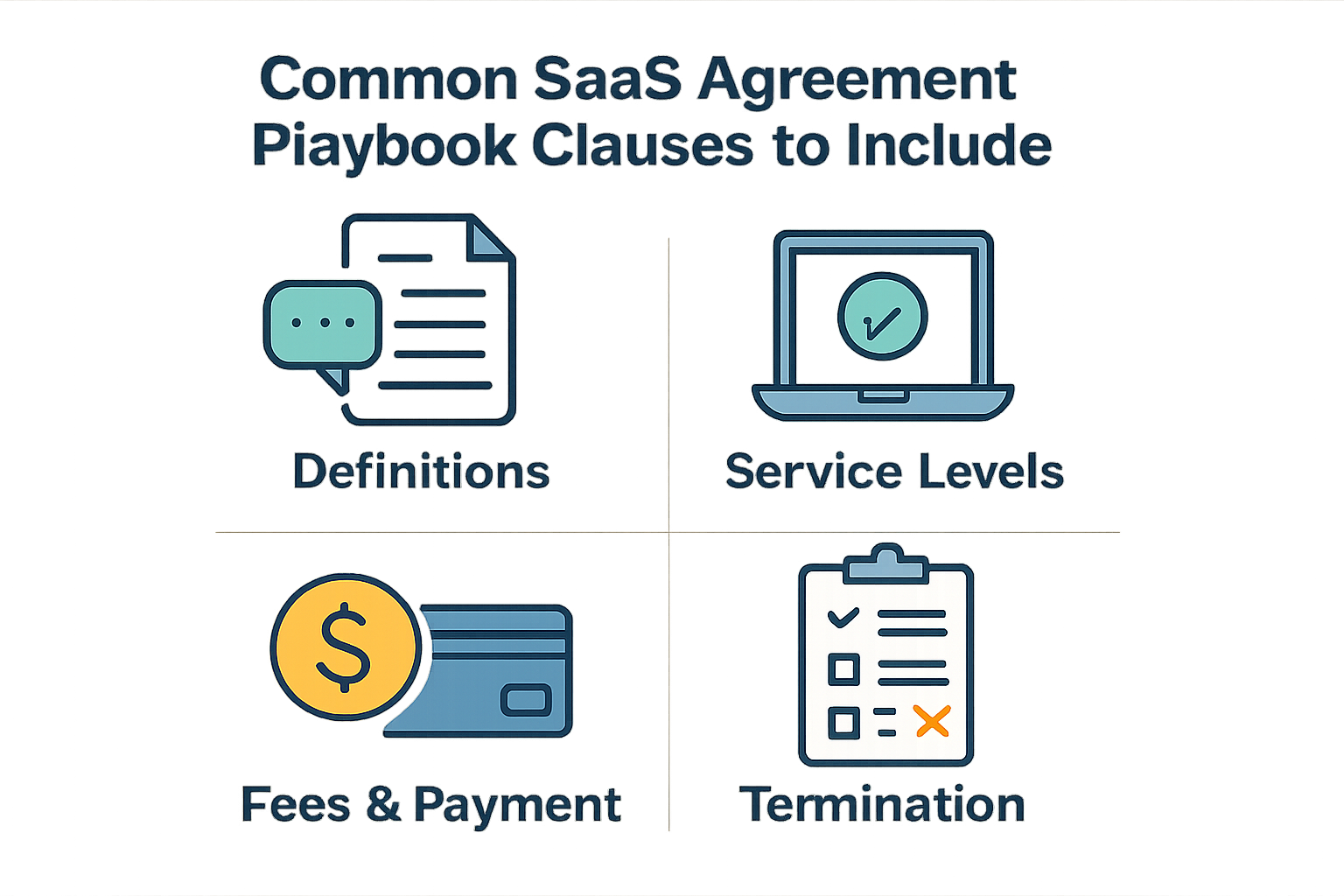
Common SaaS Agreement Playbook Clauses to Include
Building a SaaS Agreement Playbook requires a shift in mindset: you aren’t buying a product; you are buying a promise of performance. Because your company’s data will live on the vendor’s servers, your playbook must prioritize clauses that ensure security, availability, and financial control.
Here are the essential clauses that should form the foundation of your SaaS contract rubric.
1. Data Security & Privacy (The “Non-Negotiable”)
To start, the most critical section of any SaaS playbook must address how your data is handled, stored, and protected. In a world of increasing regulation (like GDPR and CCPA), you cannot leave data security to a vendor’s “standard policy.”
- Audit Rights: Does the playbook mandate that the vendor provide annual SOC2 Type II reports or allow for third-party security audits?
- Data Encryption: Is data required to be encrypted both “at rest” and “in transit”?
- Breach Notification: Does the clause require the vendor to notify you of a security incident within a strict window (e.g., 24–48 hours)?
2. Service Level Agreements (SLA) & Credits
Building on that, you need to ensure that the “service” part of Software-as-a-Service is actually delivered. If the software is down, your team loses productivity, and your playbook should reflect that financial reality.
- Uptime Commitment: Is the vendor held to a 99.9% or 99.99% uptime standard?
- Service Credits: Does the clause provide automatic billing credits if uptime falls below the agreed threshold?
- Chronic Failure: Does your playbook include a “right to terminate” if the vendor misses uptime targets for three consecutive months?
3. Subscription Renewal & Price Caps
Furthermore, your SaaS playbook must protect your budget from “renewal shock.” Once your data is integrated into a SaaS platform, the cost of switching is high, giving the vendor immense leverage at renewal time.
- Auto-Renewal Notice: Does the clause require the vendor to notify you 60–90 days before an auto-renewal kicks in?
- Price Increase Caps: Does your playbook limit annual price hikes (e.g., “Not to exceed CPI or 5%, whichever is lower”)?
- Unbundling Rights: Do you have the right to reduce seat counts or drop unused modules at the time of renewal?
4. Data Portability & Exit Rights
Lastly, you must ensure that you can get your data out just as easily as you put it in. “Vendor lock-in” is a major risk in SaaS procurement, and your playbook should mitigate this from day one.
- Return of Data: Is the vendor obligated to return your data in a structured, machine-readable format (like .CSV or .JSON) within 30 days of termination?
- Transition Assistance: Does the vendor provide “de-boarding” support to ensure a smooth transition to a new provider?
- Post-Termination Access: Can you secure a limited “read-only” window after the contract ends to ensure all data has been successfully migrated?
The Bottom Line
And there you have it…
We hope this breakdown will help you build a more robust defense for your software stack. By standardizing these levers—from security audits to renewal caps—you ensure that your SaaS investments remain secure and predictable.
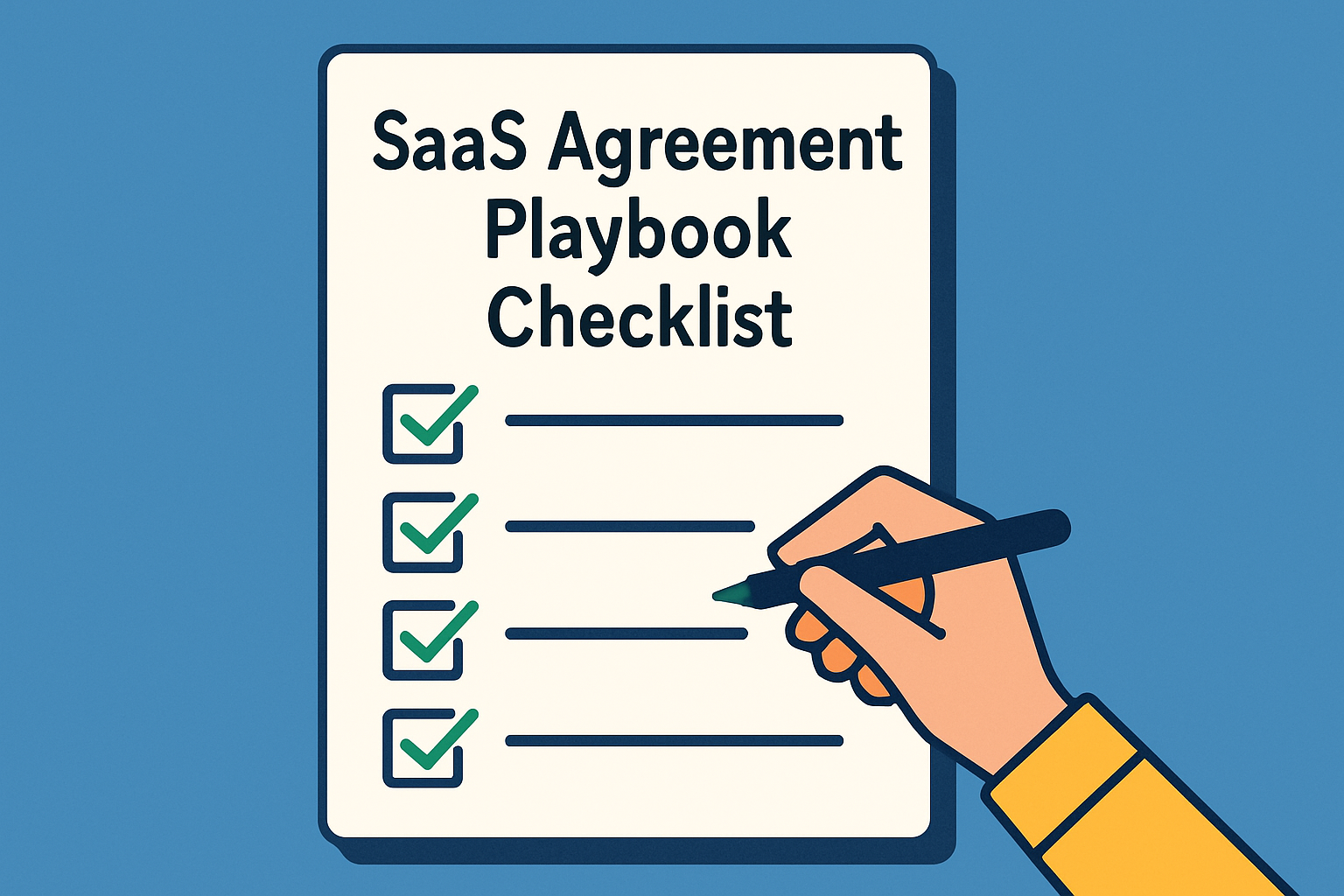
If you’re ready to put these clauses into action, check out our SaaS Agreement Playbook Checklist to start auditing your current vendors.
Or, if you’d rather automate the process, try our free SaaS Agreement Playbook Generator to turn these standards into a ready-to-use negotiation tool in minutes.
See it in action
Turn contract chaos into a streamlined workflow
Join legal teams who cut contract turnaround time by 60%. Book a 15-minute demo to see how.