Beyond the Checklist: Guide to Drafting SaaS Agreements
If you’ve ever tried to manually draft a SaaS contract by pulling a static template and editing its complex, interconnected clauses, you know the process is slow and highly prone to error.
The truth is, scaling high-value SaaS agreements isn’t about writing a perfect legal document; it’s about making a series of structured, pre-approved commercial decisions and guaranteeing those decisions are instantly translated into legally compliant text.
Your 5 SaaS Contract Essentials
So, if someone on your team asks you what absolutely needs to be in your SaaS agreement, focus their attention on these SaaS contract management essentials to mitigate immediate risk:
- Scope & Access: You must clearly define included services and license rights—and just as importantly, detail what is explicitly excluded.
- Data Security: Your agreement must explicitly cover your data ownership and the provider’s security and regulatory compliance obligations (e.g., GDPR, CCPA).
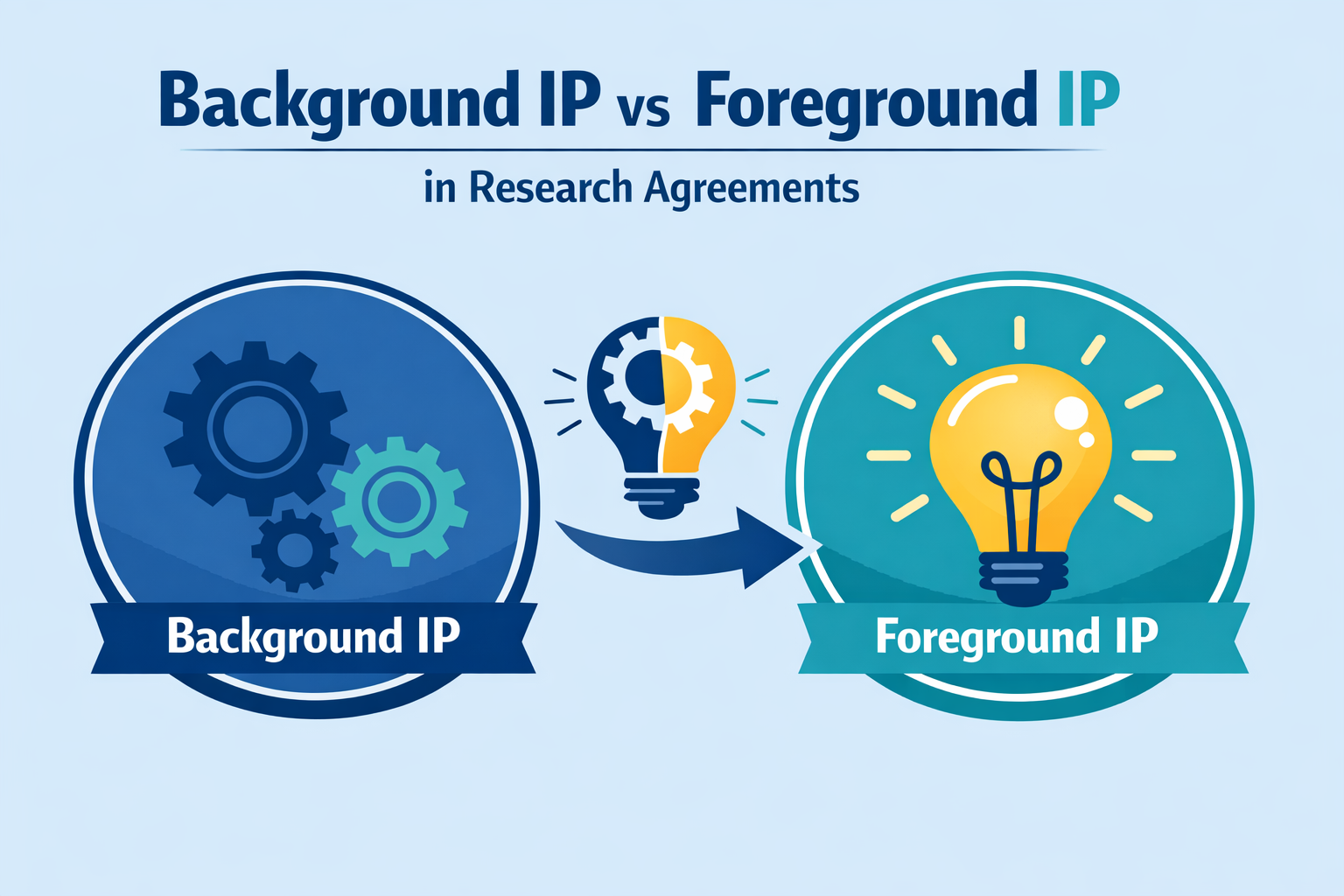
- IP Protection: Make sure you separate the provider’s background IP (the platform/code) from the customer’s foreground IP (their data).
- SLA & Remedy: Lock down specific availability commitments and define the precise financial remedy (e.g., service credits) for a service level failure.
- Liability Caps: This is vital. You must establish a clear, insurable financial ceiling for liability, typically capped at a reasonable measure like 12 months of paid fees.
SaaS Contract Drafting: 6 Steps Breakdown
Next, to ensure your agreement hits all five of those critical areas consistently, you can use a SaaS contract drafting tool or this 6 steps to craft out your SaaS agreement:
Step 1: Identify Parties, Scope, and Term (Your Foundation)
Before you worry about legal clauses, confirm the foundational elements: the exact legal entity names, the effective date, and, crucially, what features and modules are you actually granting access to? Define the start date, duration, and the necessary renewal/termination notice periods.
Step 2: Pricing and Payment Terms (Securing Your Revenue)
You need to ensure the financial mechanics are explicit to prevent disputes down the line: Define the charging structure (Subscription vs. Consumption) and be crystal clear on payment schedules and the penalties for late payment.
Step 3: Service Level Agreement (SLA) & Warranties (The Performance Promise)
This section is your company’s promise of performance. What uptime are you guaranteeing (e.g., 99.9%)? More importantly, make sure you define the only remedy for SLA failure (e.g., the customer is only entitled to a service credit, not a full termination right).
Step 4: Data Ownership and Security (Managing Critical Risk)
In a SaaS contract, controlling the data is paramount. Explicitly state that the customer retains full ownership of their data. Detail your security standards (e.g., SOC 2 compliance) and your commitment to handling regulatory compliance.
Step 5: Intellectual Property Rights (IPR) (Protecting Your Product)
You must protect the long-term value of your technology. Your core software code, documentation, and platform must remain your exclusive IP. You are granting a limited license to use the service—not own it.
Step 6: Indemnification and Limitation of Liability (Controlling Financial Exposure)
This is the most negotiated section. While you must protect the customer from claims (Indemnification), you must also set a firm, insurable cap on your financial risk. Avoid unlimited liability. Your best practice is typically capping liability at the total fees paid in the preceding 12 months.
Final SaaS Agreement Drafting Checklist
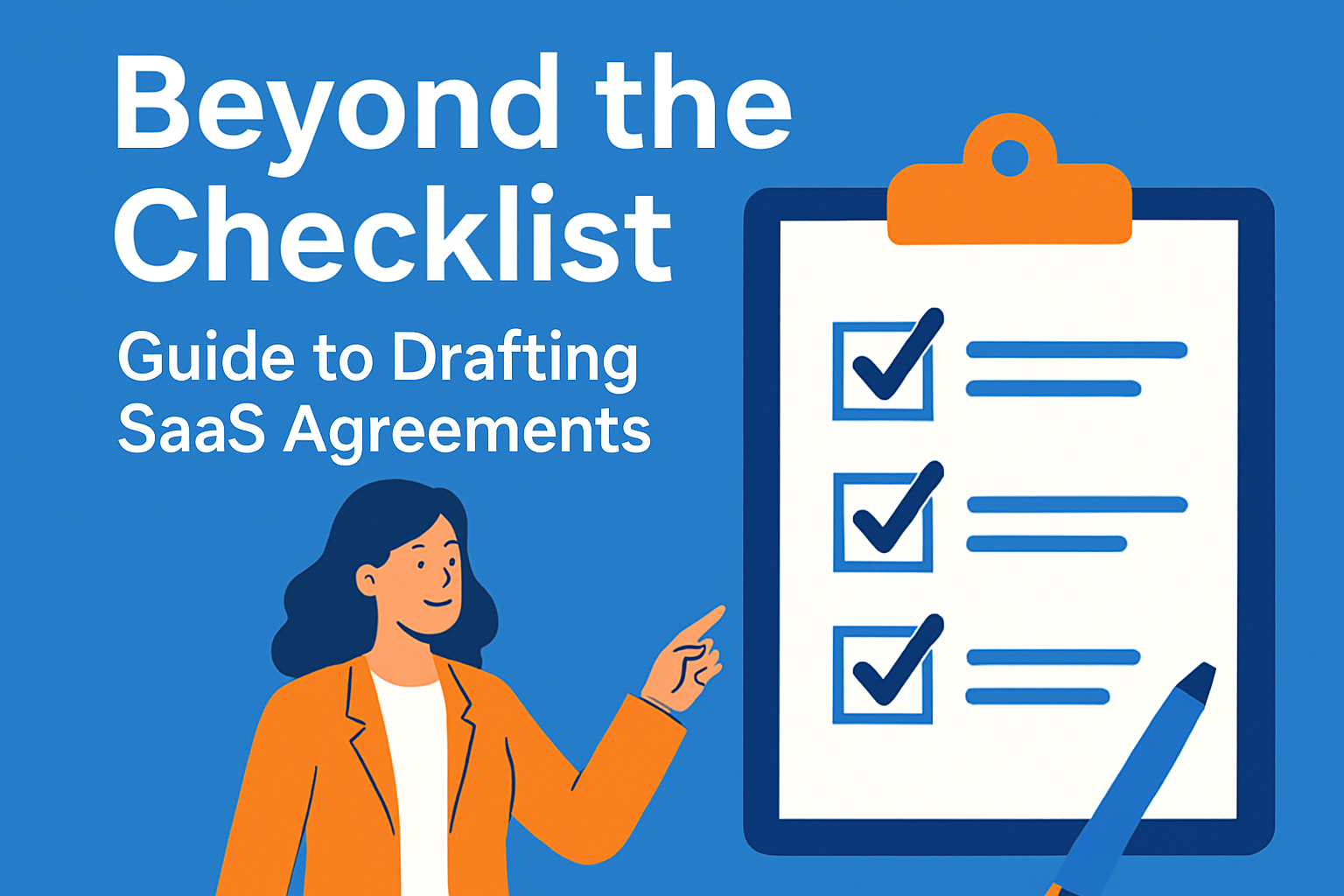
Now that you’ve systematically worked through the 6 commercial decisions, use this final checklist to verify that the essential controls are in place before execution:
- Is data ownership explicitly assigned to the customer?
- Is the liability cap reasonable and explicitly set (e.g., 12 months of fees)?
- Are penalties for SLA failure clearly defined (e.g., service credits)?
- Are all renewal and termination notices clearly stated?
- Is there clear separation between your Provider’s IP and the Customer’s data?
- Are the security commitments non-negotiable and tied to verifiable standards?
SaaS Agreement Playbook: From Checklist to Certainty
Lastly, if you find this entire process—of manual checking, selecting clauses, and verifying compliance across every deal—too menial, you’ve identified the core scaling problem.
This is why we recommend building out a SaaS Agreement Playbook.
Simply put, we operationalize everything to:
- Control the Input: Replace the risky template with a guided Q&A interface. Your commercial users only input the 6 commercial decisions, nothing more.
- Guarantee the Output: Automatically select and insert the pre-approved, legally compliant language for complex clauses (like SLA, Indemnification, and Liability) based on the input.
So, if you would like to learn how to build your own custom SaaS Agreement Playbook or learn about some of the best SaaS contract management software, feel free to book a demo with us today!
See it in action
Turn contract chaos into a streamlined workflow
Join legal teams who cut contract turnaround time by 60%. Book a 15-minute demo to see how.