5 Steps to Audit Your Active NDA Obligations
In 2026, “signing and forgetting” an NDA is a significant compliance risk. While automating your NDA renewal reminders helps you stay ahead of future deadlines, you first need to verify that your current library of agreements actually matches your operational reality.
Here are five steps to audit your NDA contracts and eliminate hidden legal liabilities.
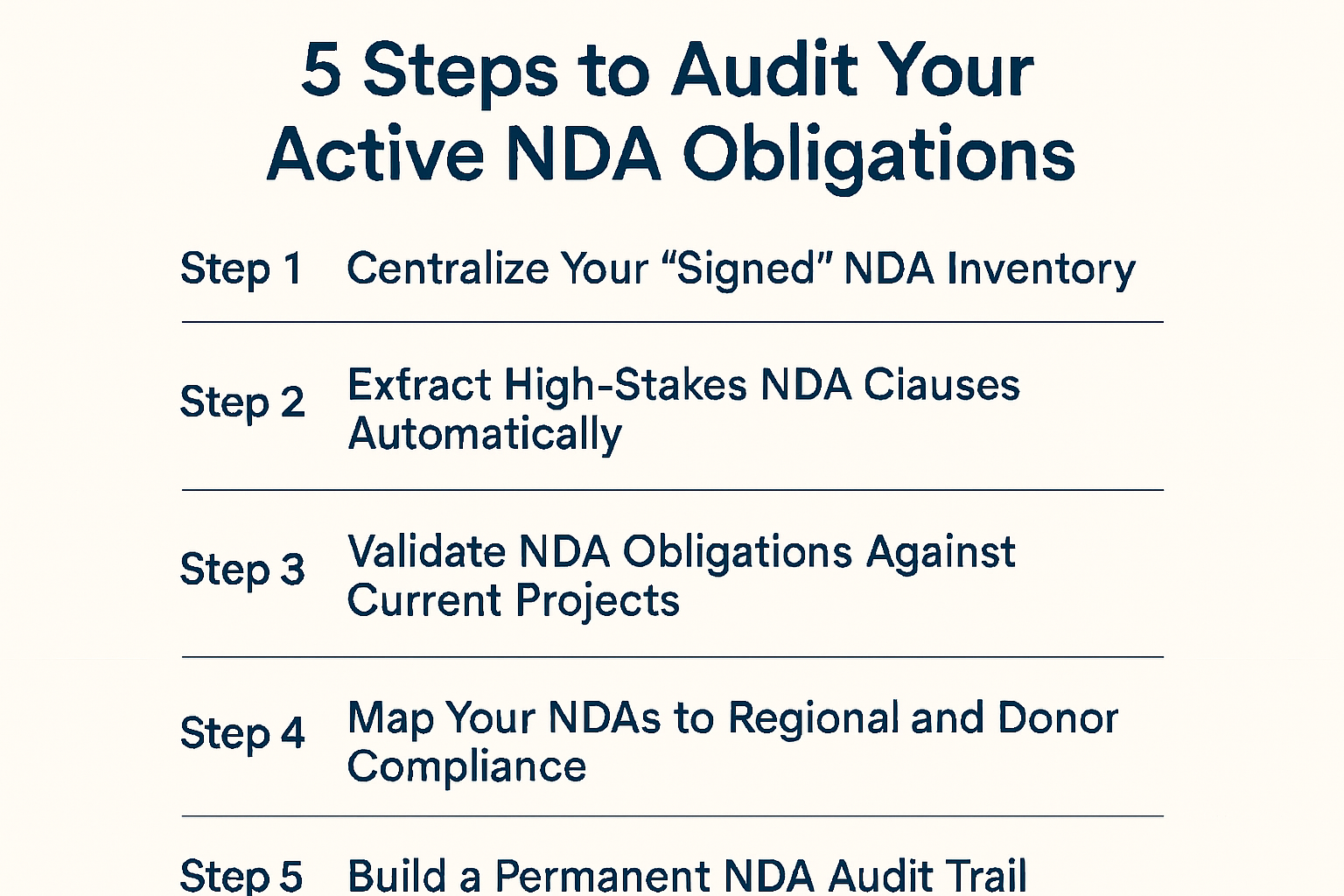
Step 1: Centralize Your “Signed” NDA Inventory
- The Action: Pull every executed agreement out of local drives and email threads to create a clean, singular baseline.
- The How-To: Use a centralized NDA repository that automatically flags duplicate files so you are only auditing the final, executed version of each partnership.
- The Outcome: You eliminate “Version Control Chaos” and ensure your audit is based on the true source of truth for every confidentiality agreement.
Step 2: Extract High-Stakes NDA Clauses Automatically
- The Action: Avoid the manual drain of reading every page to identify obligations like data destruction or specific notice periods.
- The How-To: Use a contract tracking software to scan your library and pull key data points—such as Jurisdiction, Data Handling Rules, and Governing Law—into a structured dashboard.
- The Outcome: You convert “dead” PDFs into actionable data, allowing you to audit thousands of NDA contracts in hours instead of weeks of manual labor.
Step 3: Validate NDA Obligations Against Current Projects
- The Action: Ensure the secrecy obligations in your older contracts still align with how your team is currently working.
- The How-To: Match your list of active NDAs against your current project list. If an NDA is still marked as “Active” but the research project was abandoned, you likely have an unfulfilled obligation to return data.
- The Outcome: This identifies “Ghost Obligations” that represent unnecessary legal risk and potential breach-of-contract claims.
Step 4: Map Your NDAs to Regional and Donor Compliance
- The Action: Prioritize your review on agreements that carry the most weight for your donors, grant-funders, or specific regulatory regions.
- The How-To: Filter your audited results by “Donor” or “Region” to find gaps where mandatory clauses (like specific audit rights) might be missing from your legacy NDA drafts.
- The Outcome: You prioritize remediation for the agreements that are most critical for donor/grant compliance and institutional accountability.
Step 5: Build a Permanent NDA Audit Trail
- The Action: Transition from a one-time “cleanup” event to a state of constant, permanent audit-readiness.
- The How-To: Lock your verified audit data into a leadership dashboard where every new NDA contract is automatically mapped into the system the moment it is signed.
- The Outcome: You move away from “Manual Everything,” significantly reducing the pressure on your legal team during year-end reporting or external audits.
Closing Thoughts
And there you have it…
We hope this guide helps you avoid the legal bottlenecks and compliance gaps that often hide in unmanaged NDA contract libraries. By auditing your obligations today, you protect your organization’s reputation and ensure you are only carrying the risks you actually need.
If your audit process is ready but you need a better way to visualize your status for leadership, check out our next guide on 5 key NDA metrics to include in your legal Ops dashboard.
See it in action
Turn contract chaos into a streamlined workflow
Join legal teams who cut contract turnaround time by 60%. Book a 15-minute demo to see how.