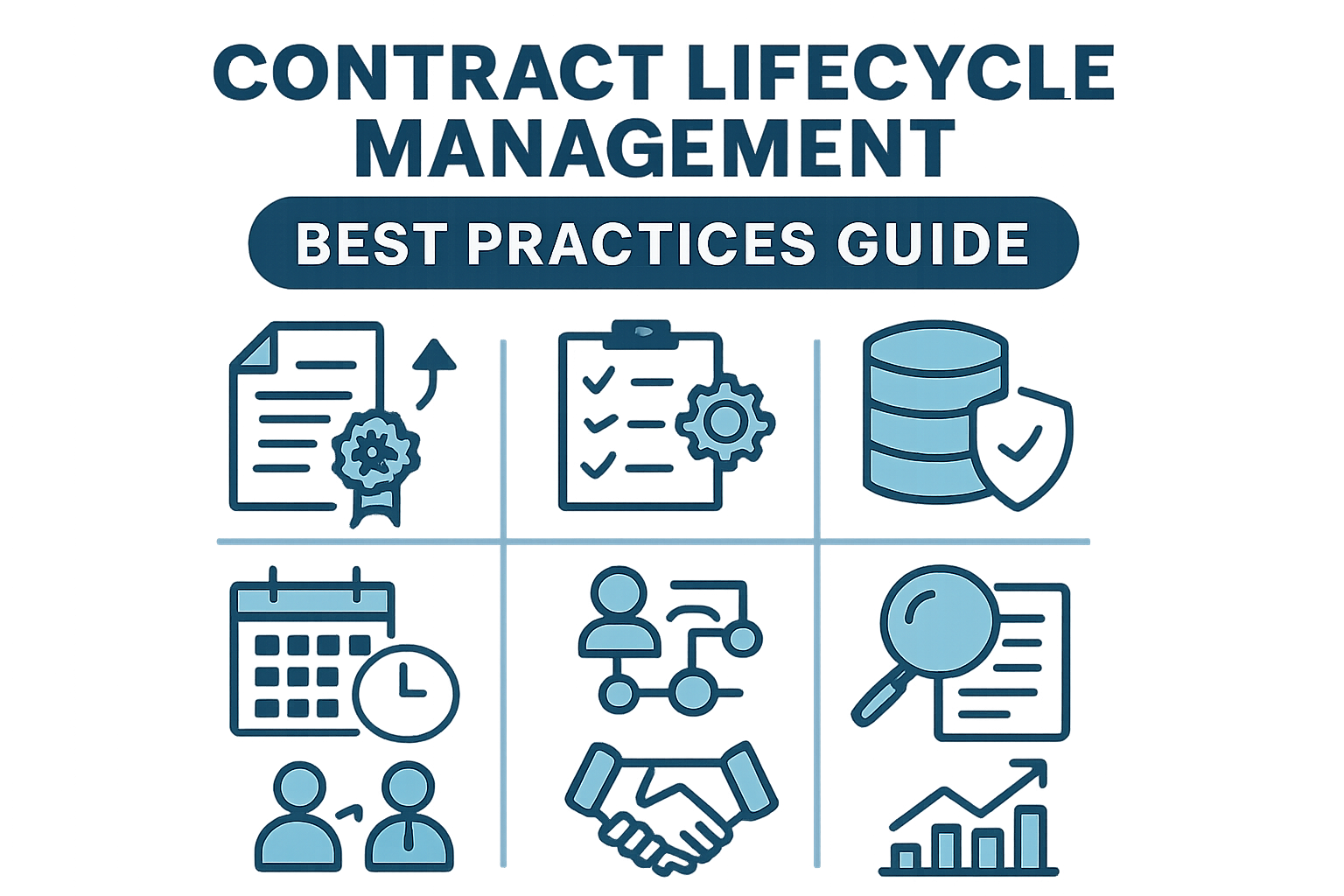
Contract Lifecycle Management Best Practices Guide
If you’re looking to scale your business in 2026, you can no longer afford to treat contract management as a “back-office” administrative task.
The most successful organizations treat their contracts as strategic assets.
But how do you actually move from a reactive mess of emails to a proactive, high-efficiency machine?
Well, It starts with a shift toward automation and ends with better alignment across your entire team.
Here is the roadmap for implementing 5 CLM best practices that stick.
1. Prioritize Workflow Automation
As the most efficient teams have discovered, the biggest wins come from contract workflow automation. It’s not just about moving faster; it’s about reducing the human errors that inevitably happen during manual hand-offs.
- The Strategy: Automate the routine administrative tasks—like routing a document for signature or notifying Finance of a new deal—so your team can stay focused on high-level negotiation. By setting up these guardrails, you are effectively avoiding common mistakes like missed deadlines or forgotten approvals that plague manual systems. This best practice transforms the entire lifecycle from a series of “stops and starts” into a fluid, automated engine.
2. Centralize and Standardize
You cannot manage what you cannot find. A central, cloud-based repository is the foundation of everything else.
- The Reality: If your contracts are scattered, you lose visibility into your risks. By centralizing everything in one place and using standardized templates, you ensure that every deal starts on a level playing field. It makes the authoring phase predictable and ensures that “rogue” language doesn’t creep into your agreements—a common mistake that often leads to lopsided liabilities.
3. Align Legal, Procurement, and Sales
A common pitfall is keeping the contract process siloed within the Legal department.
- The Strategy: Make it a point to ensure total alignment between Legal, Procurement, and Sales. Everyone should know who “owns” which part of the process. Clear roles and responsibilities prevent the “I thought you were checking that” conversations that often result in the common mistakes we see during rushed closing cycles.
4. Treat Contracts as Strategic Assets
A contract is more than just a legal shield; it’s a source of business intelligence.
- The Shift: Move beyond the “digital filing cabinet” mindset. Use your contracts to conduct thorough data analysis. What is your average deal velocity? Which clauses are being redlined the most? When you treat contracts as data, you can use risk as a negotiation lever, giving you a massive advantage in the boardroom.
5. Harness Contract Intelligence and AI
In 2026, “Contract Intelligence” is the differentiator. It’s about more than just storage; it’s about what the CLM software can tell you about your business.
- The Opportunity: Leverage AI to spot inconsistencies and extract key obligations automatically. This allows you to manage the “post-signature” phase—like price escalations or performance milestones—without having to manually read through every document in your repository.
The Bottom Line
Implementing these best practices isn’t a one-time project; it’s an ongoing commitment to operational excellence. By focusing on automation, standardization, and intelligence, you turn your contract lifecycle from a bottleneck into a competitive advantage.
See it in action
Turn contract chaos into a streamlined workflow
Join legal teams who cut contract turnaround time by 60%. Book a 15-minute demo to see how.