SaaS Agreement Playbook Guide
A SaaS Agreement Playbook is a specialized negotiation framework designed to manage how your company buys software-as-a-service. Unlike traditional software licenses where you “own” a copy of the code, SaaS is a service-based subscription.
This means your playbook must move away from “property rights” and focus heavily on service continuity, data security, and price predictability.
The Benefits of a Standardized SaaS Playbook
To start, think of a standardized SaaS playbook as your defense against the “standard online terms” that software vendors expect you to accept without question.
In the world of SaaS, these click-wrap agreements are almost always heavily weighted in the vendor’s favor; however, a playbook allows you to tilt the scales back by:
- Ensuring Data Portability: It prevents “vendor lock-in” by mandating that the provider must return your data in a usable format if the relationship ends.
- Protecting Service Levels: It establishes clear Service Level Agreements (SLAs), ensuring you get credits or the right to terminate if the software is constantly offline.
- Managing Subscription Sprawl: By standardizing renewal terms and notice periods, you prevent “zombie contracts” that auto-renew without your consent.
How to Create Your SaaS Agreement Playbook
Building on that, the secret to a great rubric is looking past the “price per seat” and focusing on the digital risks that actually keep your IT team up at night. This means you first need to identify the common SaaS Agreement clauses that act as your primary legal levers.
Once you understand those, you can define your “Lines in the Sand” for these high-stakes areas:
- The Data Security Standard: Define your minimum encryption and audit requirements (e.g., SOC2 Type II) so you aren’t reviewing security protocols from scratch for every new app.
- Uptime Requirements: Set a standard “Minimum Uptime” (usually 99.9%) and define exactly what happens to your bill when the vendor fails to meet it.
- Pricing Protections: Include a “Price Cap” on renewals. Without this, a vendor can lure you in with a low initial rate and then hike the price by 30% once your data is fully integrated into their system.
How to Use the SaaS Playbook in Your Organization
Lastly, the real magic happens when you move the playbook off the legal shelf and into the hands of the people actually clicking “subscribe.” Because SaaS deals often happen at the speed of a credit card swipe, the implementation needs to be incredibly streamlined:
- Tiered Review: Use the playbook to allow IT managers to sign off on low-risk, low-cost “Green Zone” apps, while escalating high-risk platforms (like those handling customer PII) to Legal.
- Negotiation Fallbacks: When a vendor says, “We don’t offer SLA credits,” the playbook provides the pre-approved alternative language that links downtime to a right of termination.
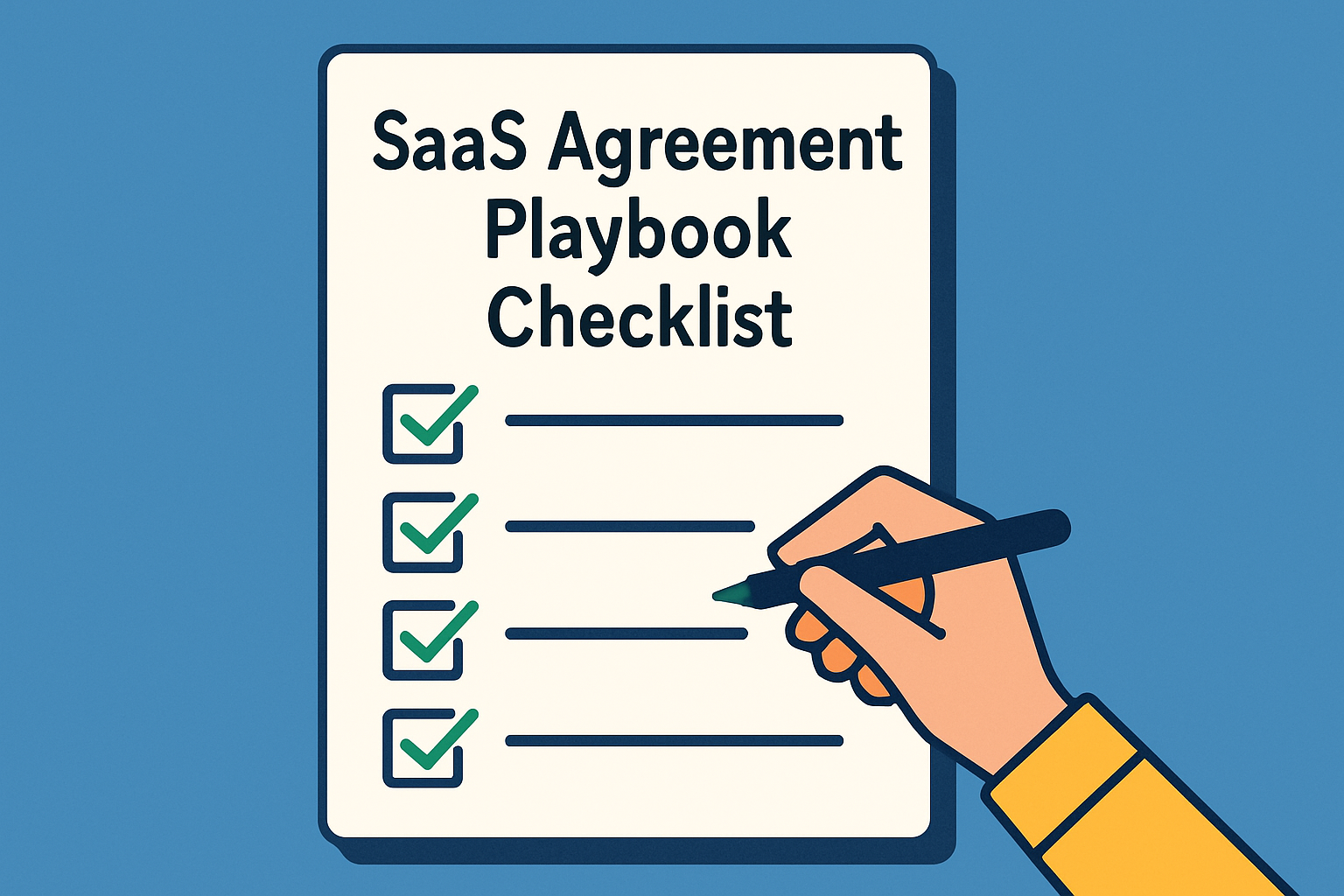
- Vendor Onboarding: Use the playbook as a pre-contract checklist during the “Discovery” phase to see if a vendor can even meet your baseline security and privacy requirements before you waste time on a demo.
The Bottom Line
And there you have it…
To recap, a SaaS Agreement Playbook transforms your software procurement from a reactive “sign-and-hope” process into a proactive strategy by providing:
- Data Sovereignty: Ensuring you own your data and can get it back if you leave the platform.
- Uptime Assurance: Holding vendors accountable for the availability of the tools your team relies on.
- Financial Predictability: Preventing hidden fees and aggressive price hikes at the time of renewal.
- Scalable Compliance: Making sure every piece of software in your stack meets your company’s security standards.
Also, If you are building your SaaS playbook from scratch, come try out our free free SaaS Agreement Playbook Generator to codify your standards in minutes and start negotiating from a position of strength.
See it in action
Turn contract chaos into a streamlined workflow
Join legal teams who cut contract turnaround time by 60%. Book a 15-minute demo to see how.