Contract Management Workflow: The Complete Guide
In the world of high-growth business, a contract isn’t just a piece of paper; it’s the fuel that keeps the engine running. But without a structured contract management workflow, that fuel often gets stuck in the pipes, leaving deals stranded and teams frustrated.
To clear those blockages, you need a clear map of the journey.
Simply put, a contract management workflow is that end-to-end map—covering every step from the initial request generation to the final renewal.
When done right with automation, it functions like a high-speed transit system, ensuring every stakeholder from Sales to Finance knows exactly when it’s their turn to step in.
Core Stages of a Contract Management Workflow
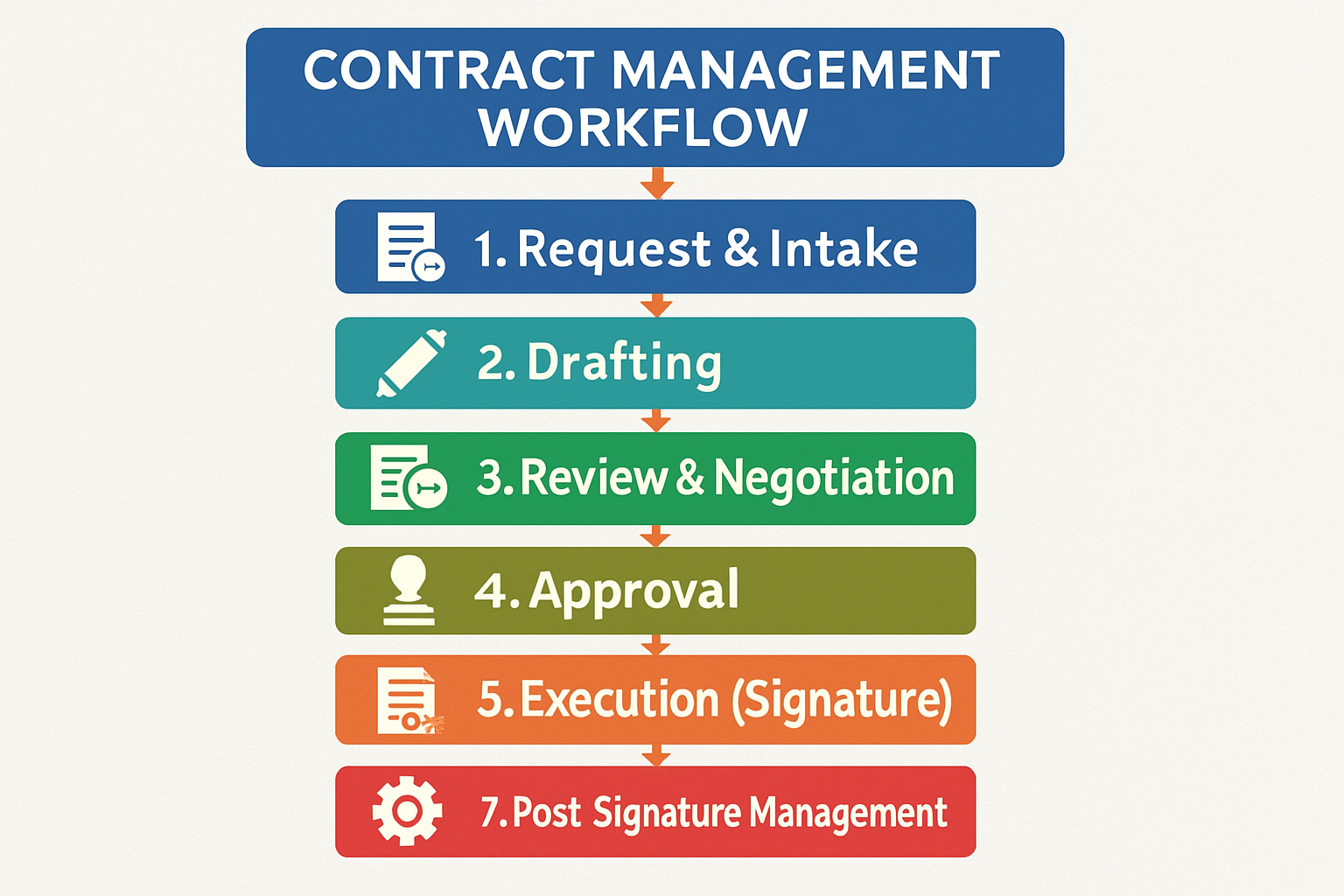
While every company has its own nuances, most teams use a contract lifecycle management software to anchor their contract management process around these seven fundamental steps:
- Request & Intake: This is the starting line. A team member (usually from Sales or Procurement) requests a contract. The best practice here is to use a standardized form to gather all the necessary deal data upfront so Legal doesn’t have to go on a “fact-finding mission.”
- Drafting (Authoring): This is where the first version of the contract is created. To avoid common mistakes like using outdated terms, teams often use pre-approved templates to ensure they are starting from a “Gold Standard” position.
- Review & Negotiation: The “Redlining” phase. This is the back-and-forth between parties to find a middle ground. The goal here is speed without compromising the company’s risk tolerance.
- Approval: Before a contract can be signed, it needs the internal green light. This might involve a quick check from Finance or a final sign-off from the VP of Legal.
- Execution (Signature): The moment of truth. In 2026, this is almost exclusively handled via e-signature to eliminate the “print-scan-email” delay.
- Storage & Search: Once signed, the contract needs to live in a “Single Source of Truth.” A central repository ensures that the final version is accessible to anyone who needs it.
- Post-Signature Management: This is the most overlooked stage. It involves tracking obligations, monitoring performance, and setting alerts for renewals so you never get caught by an “auto-renew” clause you didn’t want.
Benefits of a Contract Management Workflow
By formalizing your contract management workflow, you move from a “black box” of uncertainty to a predictable engine that delivers three primary business results:
- Accelerated Deal Velocity: Firstly, high-performing teams with structured workflows have reported a 20-30% reduction in the contract cycle time as sales doesn’t have to guess who has the document resulting in deals closing faster and revenue hitting the books sooner.
- Risk Mitigation: Secondly, by ensuring every contract goes through the same pre-approved “Drafting” and “Approval” stages, you eliminate the common mistake of signing off on lopsided liabilities, gaining the peace of mind that comes with knowing no “rogue” terms are slipping through the cracks.
- Reclaimed Legal Capacity: Lastly, when your legal team isn’t bogged down in “Version Control Chaos” or manual data entry, they can focus on high-level strategy. A structured workflow can reduce administrative “busywork” for lawyers by up to 50%, allowing them to act as true business partners rather than document processors.
The Bottom Line
A structured contract management workflow is the skeleton of your business relationships.
If the skeleton is weak, the business can’t support the weight of its own growth.
By mapping out these stages, you aren’t just “organizing files”—you’re building a workflow that allows your team to close deals with confidence and speed.
See it in action
Turn contract chaos into a streamlined workflow
Join legal teams who cut contract turnaround time by 60%. Book a 15-minute demo to see how.