
Important Clauses to Include in Your Customer Agreement
Whether you call it a Customer Agreement, a Client Contract, or a Service Agreement, this document is the “manual” for your business relationship. It goes beyond broad legal protections to define the day-to-day operations: how you get paid, who owns the work, and where the boundaries lie.
To build a secure and scalable agreement, ensure these eight customer agreement clauses are covered:
1. Scope of Services & The “Change Order” Trigger
A clear description of services spells out exactly what deliverables your business will provide—and just as importantly, what it won’t.
Instead of just saying “Marketing Services,” specify the exact volume (e.g., “Management of 3 social channels”).
To prevent “scope creep,” include a simple trigger: “Any requests outside of this defined scope will be treated as a Change Order and billed at our standard hourly rate.”
This makes the conversation about extra fees a contractual requirement rather than an awkward negotiation.
2. Payment Terms & The “Suspension” Lever
Most agreements have payment windows, but they lack “teeth.” Beyond just stating “Net-30,” give yourself a lever to pull if things go south.
A strong clause allows you to suspend access or services if an invoice is 15 days overdue.
High-growth teams often include this as a non-negotiable standard in their customer agreement playbook because clients tend to pay much faster when the software turns off than they do for a 1.5% interest fee.
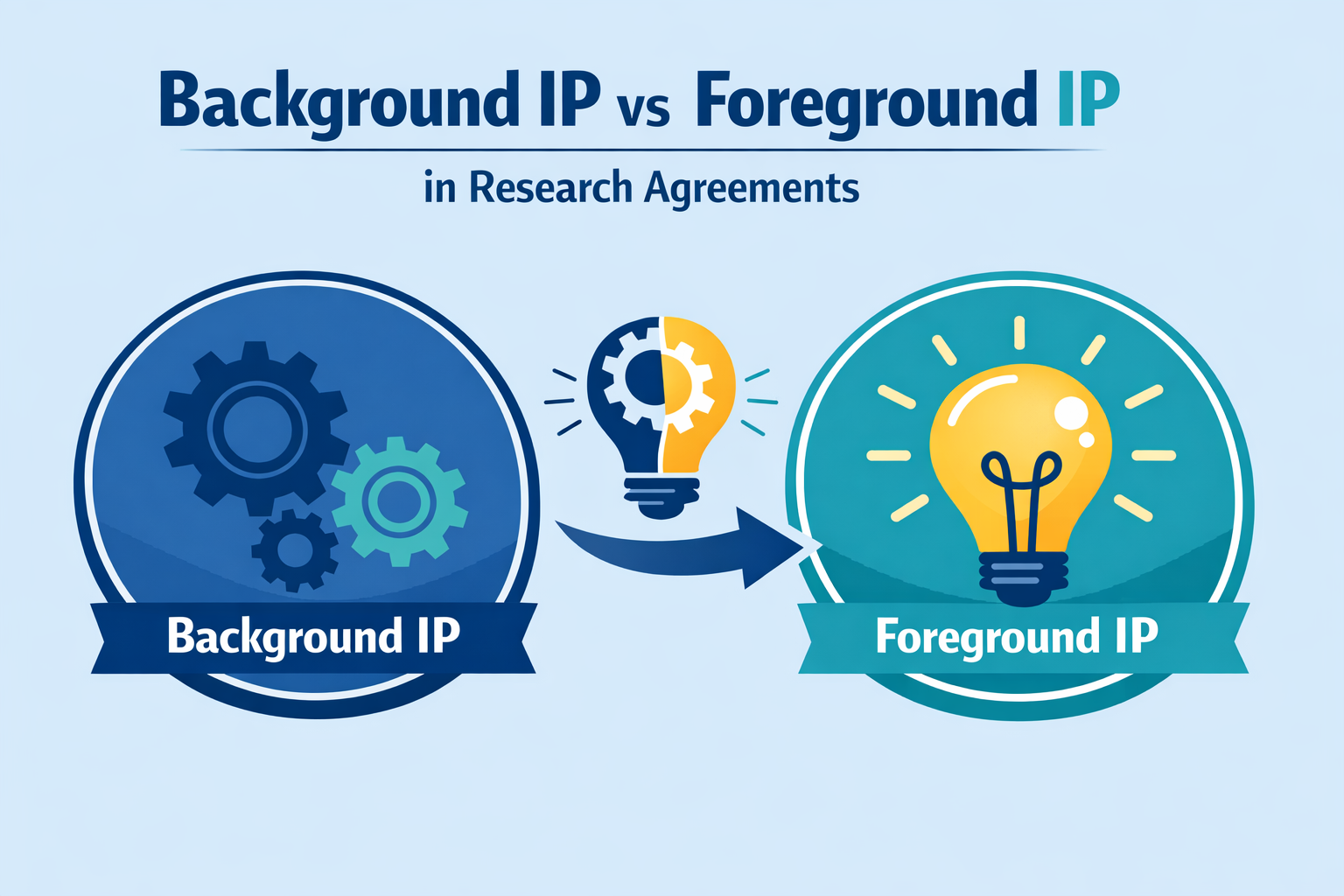
3. Intellectual Property: The “Paid-In-Full” Requirement
One of the biggest mistakes is giving away ownership of your work before the check clears.
Ensure your IP clause is contingent on payment.
State clearly that the “Work Product” or “Deliverables” only transfer to the client after final payment is received in full.
If they don’t pay, they don’t legally own the strategy or the code you built for them.
4. Limitation of Liability (The 12-Month Cap)
You should never risk your entire company for a single contract.
A fair and standard way to handle this is to cap your total financial exposure at the amount of fees the customer actually paid you in the 12 months preceding the claim.
This is a critical item to include on your customer agreement checklist to ensure your risk is always proportionate to the deal value.
5. Termination & “Work in Progress” Protection
Breaking up is hard, but it shouldn’t be a financial loss for you.
If a client terminates “for convenience” (just because they want to end the deal early), ensure you are protected.
Your clause should state that the customer is responsible for all fees and non-cancelable expenses incurred up to the moment the termination notice expires.
6. Data Privacy & The “Anonymized Data” Right
If you are a service provider, the data you collect is often your most valuable asset for improving your product.
Beyond standard privacy compliance, secure the right to use “De-identified” or “Aggregated” data.
This allows you to use the patterns in the data for benchmarking and analytics without violating the client’s individual privacy.
7. Indemnification (The “Third-Party” Shield)
This clause determines who pays the legal bills if a third party sues over the work.
Usually, you should only indemnify the customer for things you can control, such as “IP Infringement” (confirming you didn’t steal the work you’re selling).
In return, the customer should indemnify you against any losses caused by their misuse of your service.
8. Acceptance & The “Deemed Approved” Window
Stop the “infinite feedback loop” that prevents projects from ever finishing.
Establish a clear “Review Period” (e.g., 5 business days).
If the customer doesn’t provide written feedback within that window, the work is “Deemed Accepted” and you are clear to move to the next milestone or send the final invoice.
And there you have it!
Including these eight essential clauses ensures that your Customer Agreement is more than just a legal document—it’s a tool that protects your cash flow and your intellectual property.
If you’re ready to turn these clauses into a repeatable negotiation strategy for your sales team, try our free customer agreement playbook generator.
It takes these essentials and builds pre-approved “fallback” positions for you instantly.
See it in action
Turn contract chaos into a streamlined workflow
Join legal teams who cut contract turnaround time by 60%. Book a 15-minute demo to see how.