Reduce Contract Cycle Times in University Research
In the race for breakthrough discoveries and federal grant funding, the Research Office is often the unsung engine of a university.
But when contract cycle times stretch into weeks or months, it doesn’t just frustrate researchers, it risks project funding and delays innovation.
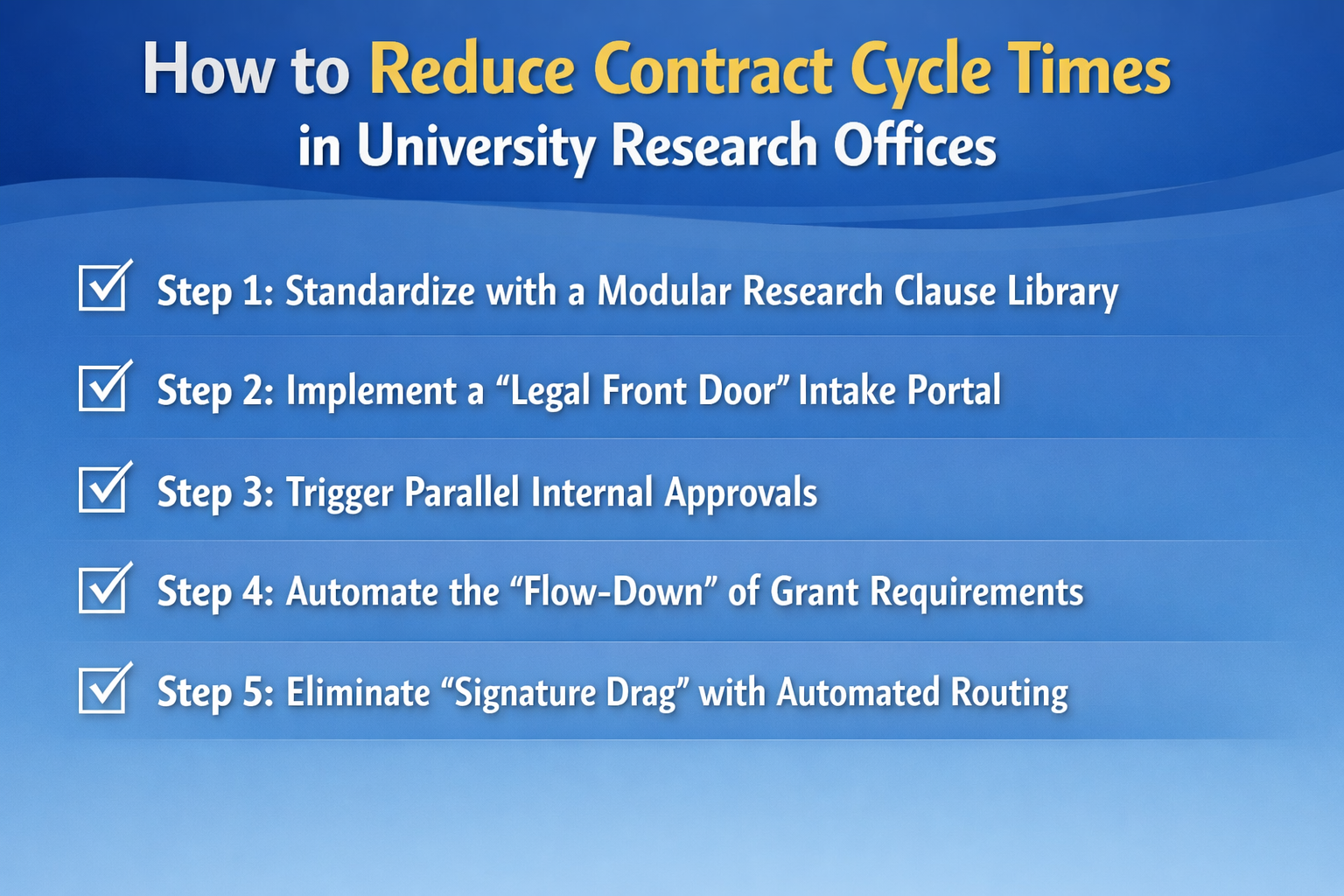
Here are the 5 steps to reducing contract cycle times in university research offices:
Step 1: Standardize with a Modular Research Clause Library
Instead of drafting from scratch every time a PI brings you a new project, you can use a modular library to handle the “standard” parts of the deal so you can focus on the technical specifics.
It stops the “special snowflake” syndrome that keeps you stuck in redlines.
We recommend building out modules for:
- Publication Rights: Language that safeguards academic freedom without needing a fresh legal review for every study.
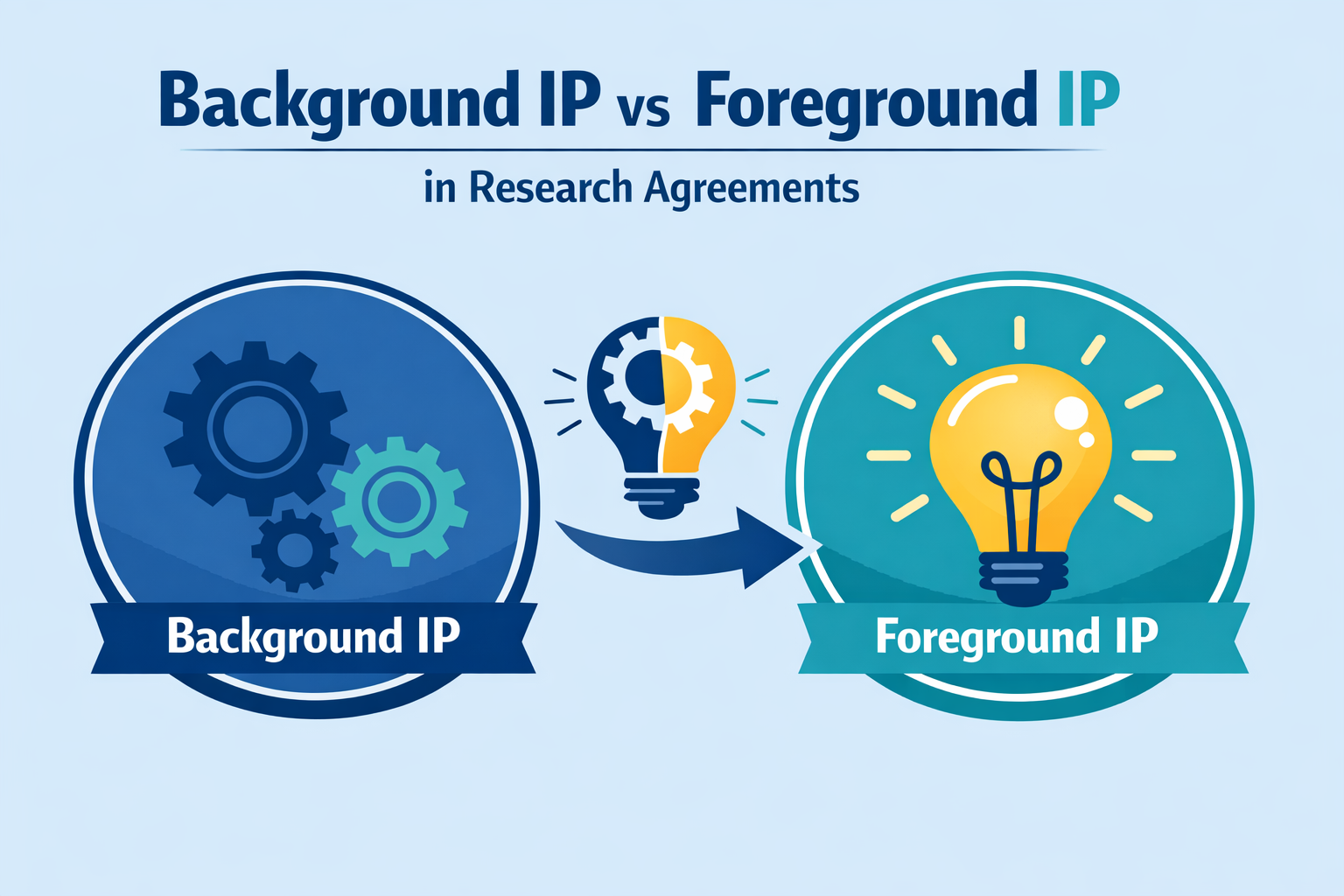
- IP Ownership: Clearly defined blocks for Background vs. Foreground IP that fit most collaboration models.
- Indemnity & Liability: Standardized tiers that adjust based on whether you’re dealing with a peer institution or a corporate sponsor.
Step 2: Implement a “Legal Front Door” Intake Portal
We’ve all experienced the “email chase,” waiting days for a PI to send a missing Statement of Work or Grant ID.
Moving away from an open inbox to a structured intake portal ensures that when a contract hits your desk, you actually have everything you need to start.
Consider using a portal that allows you to:
- Mandate Key Fields: The system won’t let a request through until the PI attaches the necessary funding or scope documents.
- Auto-Triage: Automatically route low-risk agreements (like standard NDAs) to a “Fast-Track” while flagging high-value industry partnerships for senior review.
Step 3: Trigger Parallel Internal Approvals
The “relay race” of waiting for Research Integrity to finish before it goes to Export Control or Finance creates an artificial lag. By using a system that allows for parallel review, all stakeholders can provide input at the same time so a single absence doesn’t stall the deal.
To speed up the workflow, try to:
- Enable Simultaneous Commenting: Let the IP officer and the Finance team work on their respective sections at once.
- Set Role-Based Permissions: Ensure a PI can view the progress and add technical comments without accidentally editing “locked” legal clauses.
Step 4: Automate the “Flow-Down” of Grant Requirements
Manually cross-referencing NIH or NSF grant awards against sub-contracts is a massive drain and prone to error. You can eliminate the tedious “flow-down” process by linking your grant management data directly to your templates, ensuring compliance is “baked in” from the start.
To optimize this process, consider:
- Linking Your Data Systems: Pulling grant-specific details (like Award Numbers and PIs) directly into the contract draft.
- Auto-Populating Compliance: Having the software automatically insert the required federal flow-downs based on the funding source identified during intake.
Step 5: Eliminate “Signature Drag” with Automated Routing
We’ve all seen a contract get negotiated in record time, only to sit on a Dean’s desk for a week. When you’re at the finish line, you shouldn’t be slowed down by “print-sign-scan” workflows. Automating the routing ensures the final step is as fast as the first.
To close the loop faster, try:
- Electronic Signature Integration: Moving away from “Print-Sign-Scan” entirely to allow for signing from any device.
- Automated Escalation: Setting the system to ping the signatory every 24 hours until the document is executed.
- Live Status Dashboards: Giving researchers a “status tracker” view so they can see exactly whose desk the contract is sitting on.
Conclusion
By focusing on these five operational levers, you aren’t just shortening cycle times; you’re ensuring that the university’s best minds can focus on the lab, not the legal queue.
If you’re ready to see how a dedicated contract drafting software can handle the unique complexities of Tech Transfer and Sponsored Research, feel free to book a demo with us.
Otherwise, check out our next article on streamlining grant contract management.
See it in action
Turn contract chaos into a streamlined workflow
Join legal teams who cut contract turnaround time by 60%. Book a 15-minute demo to see how.