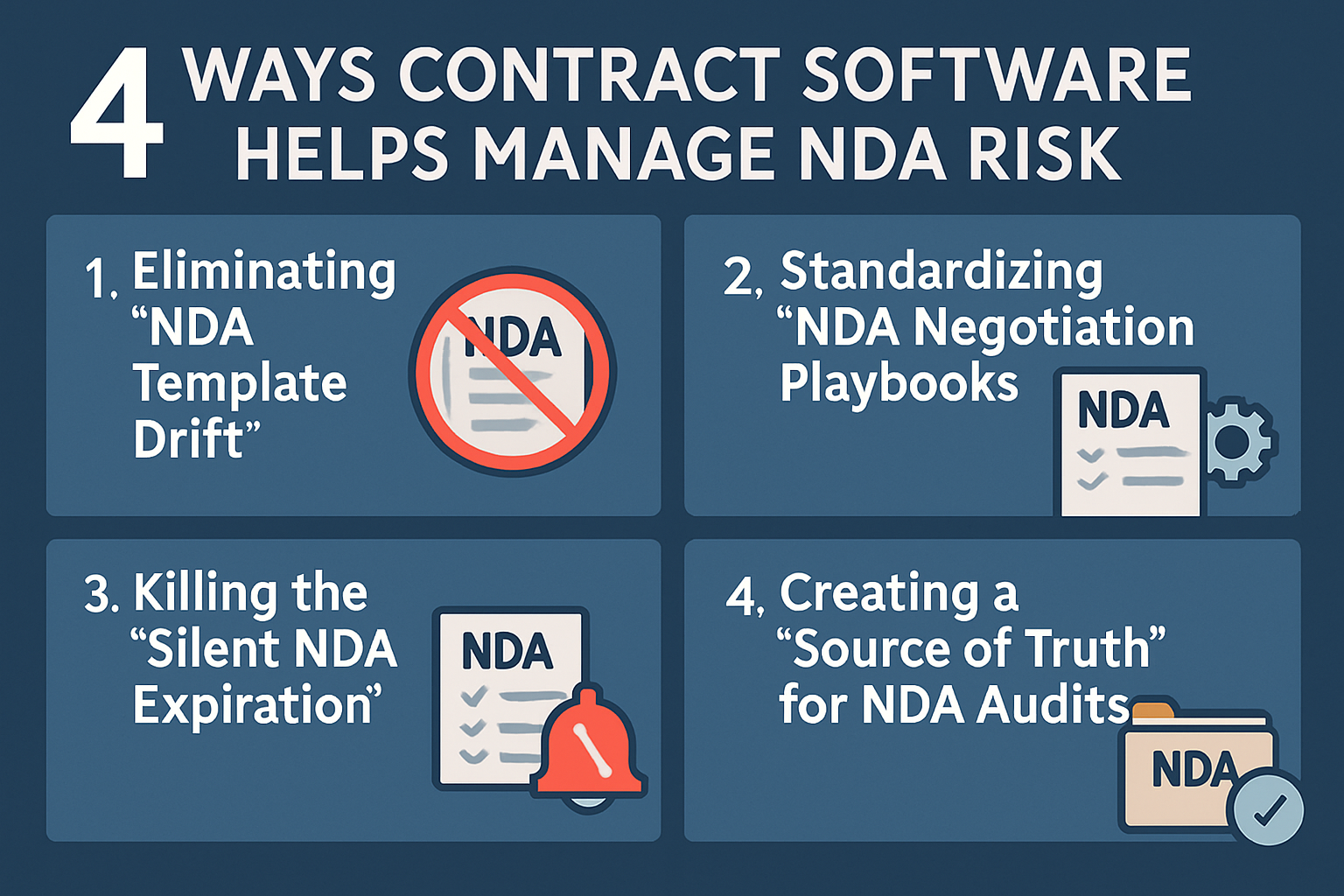
4 Ways Contract Software Helps Manage NDA Risk
If you’re managing NDAs through email and scattered folders, you aren’t just moving slowly—you’re leaving the door open for legal “black swans.” NDAs might seem low-risk because they are common, but a single mistake can leave your most valuable trade secrets completely unprotected.
Moving to a NDA contract software isn’t just about speed; it’s about hardcoding safety into the process.
Here are four ways it actually protects you.
1. Eliminating “NDA Template Drift”
When a team member is in a rush, they often grab an old NDA from their desktop to “save time.” The problem? That version might be three years old and missing updated clauses for new data privacy laws or recent intellectual property protections.
- The Software Solution: You host a single “Master Template” in the system. When someone needs an NDA, the software generates it using the most current, legally-vetted language every single time.
- The Safety Net: This removes the danger of “rogue” versions or outdated terms leaking into your new partnerships.
2. Standardizing “NDA Negotiation Playbooks”
In a manual world, non-legal staff might negotiate an NDA and accidentally agree to a “1-year” confidentiality term for a trade secret that actually needs 10 years of protection. Without a dedicated NDA contract system, these errors are almost impossible to catch before it’s too late.
How the Tech Intervenes: Digital playbooks set the guardrails. If a counterparty tries to change a high-risk clause, the software flags it and suggests your pre-approved “fallback” position.
The Compliance Win: You maintain a consistent risk profile across 100% of your deals, regardless of who is handling the negotiation.
3. Killing the “Silent NDA Expiration”
An NDA is only a shield if it’s still active. Most manual systems have no way of tracking when an NDA expires or when you are supposed to return or destroy the confidential data you received.
The Automation Advantage: The platform automatically identifies the expiration date and builds a “ticking clock” reminder directly into your calendar.
Risk Avoidance: You get a notification 90 days before an NDA lapses, so you can either renew it or ensure sensitive data is handled properly—stopping a breach before it starts.
4. Creating a “Source of Truth” for NDA Audits
If a leak happens and you end up in court, saying “I think we signed that back in June” isn’t a legal defense. You need to prove exactly which version was signed, who signed it, and when.
The Digital Trail: Every single action—from the first draft to the final signature—is logged in a permanent, unchangeable audit history.
Defensibility: You have an ironclad, searchable record of every agreement, making it easy to prove you did your due diligence if things ever go wrong.
Closing Thoughts
We hope this has given you a better idea of how the right software doesn’t just speed things up, but actually “hardcodes” safety into your NDA process.
And remember, moving away from a manual setup is never easy, but the peace of mind you get from knowing your IP is actually protected far outweighs the temporary headache of changing your workflow.
See it in action
Turn contract chaos into a streamlined workflow
Join legal teams who cut contract turnaround time by 60%. Book a 15-minute demo to see how.