
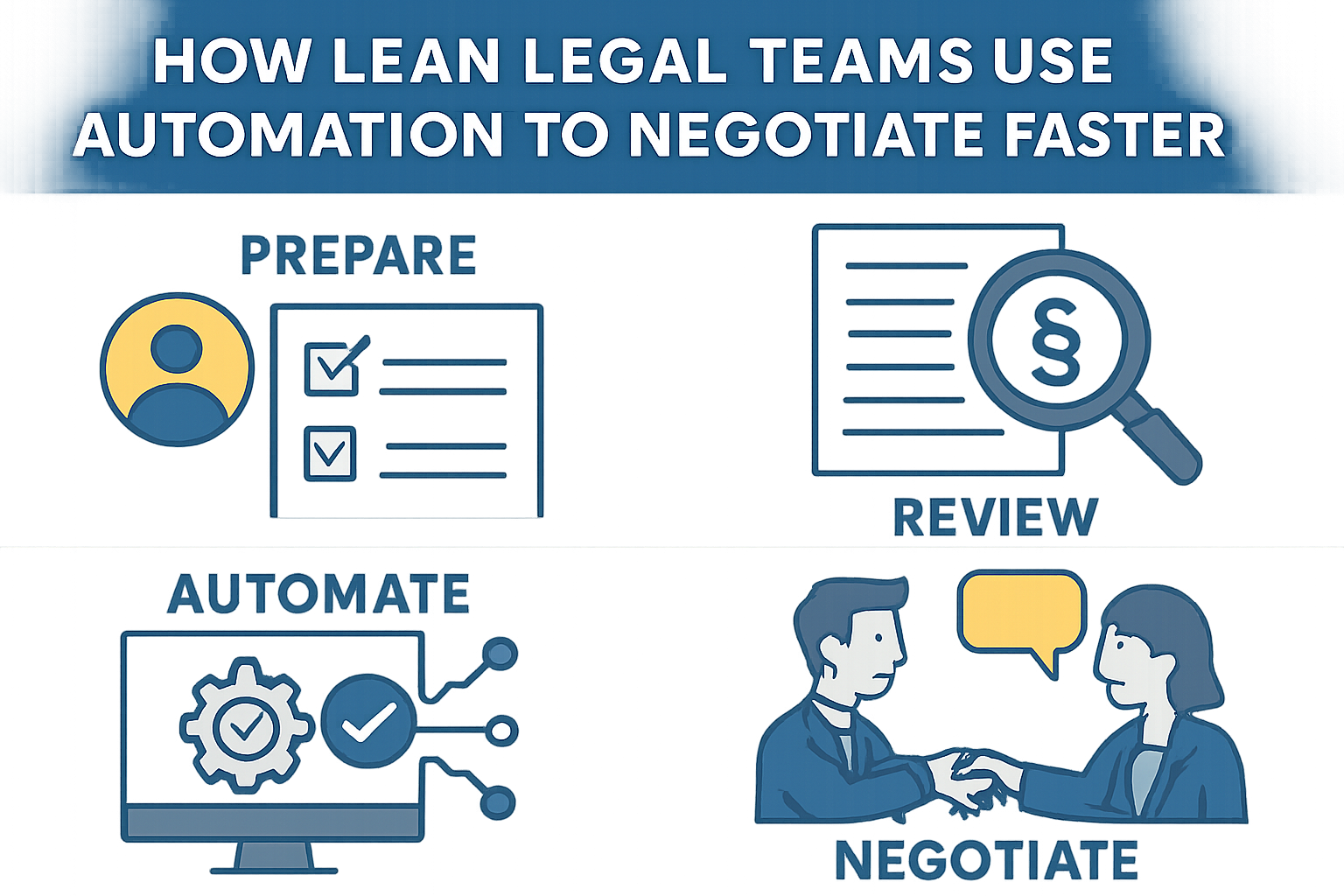
How Lean Legal Teams Use Automation to Negotiate Faster
In larger legal departments, workflows are often bogged down by layers of compliance and hierarchy.
However, lean teams of two or five are proving that size is not a prerequisite for impact.
By leveraging automation, these teams turn their workflow into a high-speed engine—allowing them to bypass the noise, avoid common negotiation mistakes and apply their expertise exactly where it creates the most value.
1. High-Speed Intake: The Ultimate Commercial Filter
Small legal departments don’t just “take requests”; they set the terms of engagement. Automation allows these teams to use intake as a strategic filter that eliminates administrative clutter before it even reaches a lawyer’s desk.
- Driving Accountability: By using automated intake that requires a “Commercial Context” summary, legal teams ensure that stakeholders have vetted their own priorities.
- Strategic Alignment: When a business lead identifies the primary goal or the “Legal Hills” they are willing to trade for speed, the lawyer is immediately equipped to move.
- The Result: Legal is no longer a “black hole” for requests; it is a high-velocity partner that only touches deals that are ready to move.
2. The 80/20 Rule: Dominating Volume with Digital Playbooks
The most successful lean teams don’t waste time on routine agreements. They automate them. By applying an 80/20 logic to their contract stack, they ensure that the bulk of their volume moves itself.
- Automated High-Velocity Tracks: For routine, low-risk contracts, these teams deploy digital playbooks and pre-approved templates.
- Frictionless Execution: These deals move to signature with minimal manual intervention, clearing the schedule for high-value work.
- Focused Impact: This surgical precision ensures that the team’s “deep work” is reserved exclusively for the 20% of enterprise deals that truly drive company growth.
3. One-Click Redlining: Cutting Negotiation Time in Half
Negotiation “ping-pong” is a relic of the past for teams that use automation. Instead of flagging problems and waiting for a response, they provide the solution instantly.
- Precision Drafting: Rather than just striking a clause, automated tools allow legal counsel to insert preferred fallback text with a single click.
- The “Signable Version” Strategy: By presenting a finished, reasonable alternative in the first response, they drastically reduce the number of negotiation rounds.
- Closing the Gap: Counterparties are far more likely to accept a fair, ready-to-sign alternative than to continue a time-consuming debate.
4. Version Sovereignty: Owning the Source of Truth
Manual version control and “word-doc-hunting” are major friction points that high-performing teams have entirely eliminated.
- Total Document Control: By hosting the master version on a contract negotiation platform, the legal team maintains “Version Sovereignty.”
- Eliminating Stealth Edits: Automated syncing pulls counterparty changes into a secure environment, highlighting differences instantly.
- Strategic Pace: This ensures the team always owns the “Truth,” allowing them to dictate the pace of the deal and skip the late-night manual comparisons.
5. Post-Signature Leverage: Turning Data into Growth
A deal isn’t just a signed paper; it’s a source of future leverage. Automation ensures that the value of a contract is captured the second it is executed.
- Automated Notice Capture: High-performance systems pull renewal and termination windows automatically as soon as the signature is dry.
- Intelligent Alerts: By pushing these dates into shared calendars or Slack, the team stays ahead of every deadline.
- Proactive Management: This turns legal from a reactive function into a proactive driver of leverage, ensuring the company never misses an opportunity to renegotiate or exit.
Closing Thoughts
And there it is…
When lean legal teams embrace automation, they don’t just “get through the day”—they redefine what a small team is capable of.
Remember - automation is the bridge between being a back-office function and a driver of company growth**.** By building best practices around precision and speed, these teams ensure they aren’t just part of the business; they are leading it.
See it in action
Turn contract chaos into a streamlined workflow
Join legal teams who cut contract turnaround time by 60%. Book a 15-minute demo to see how.