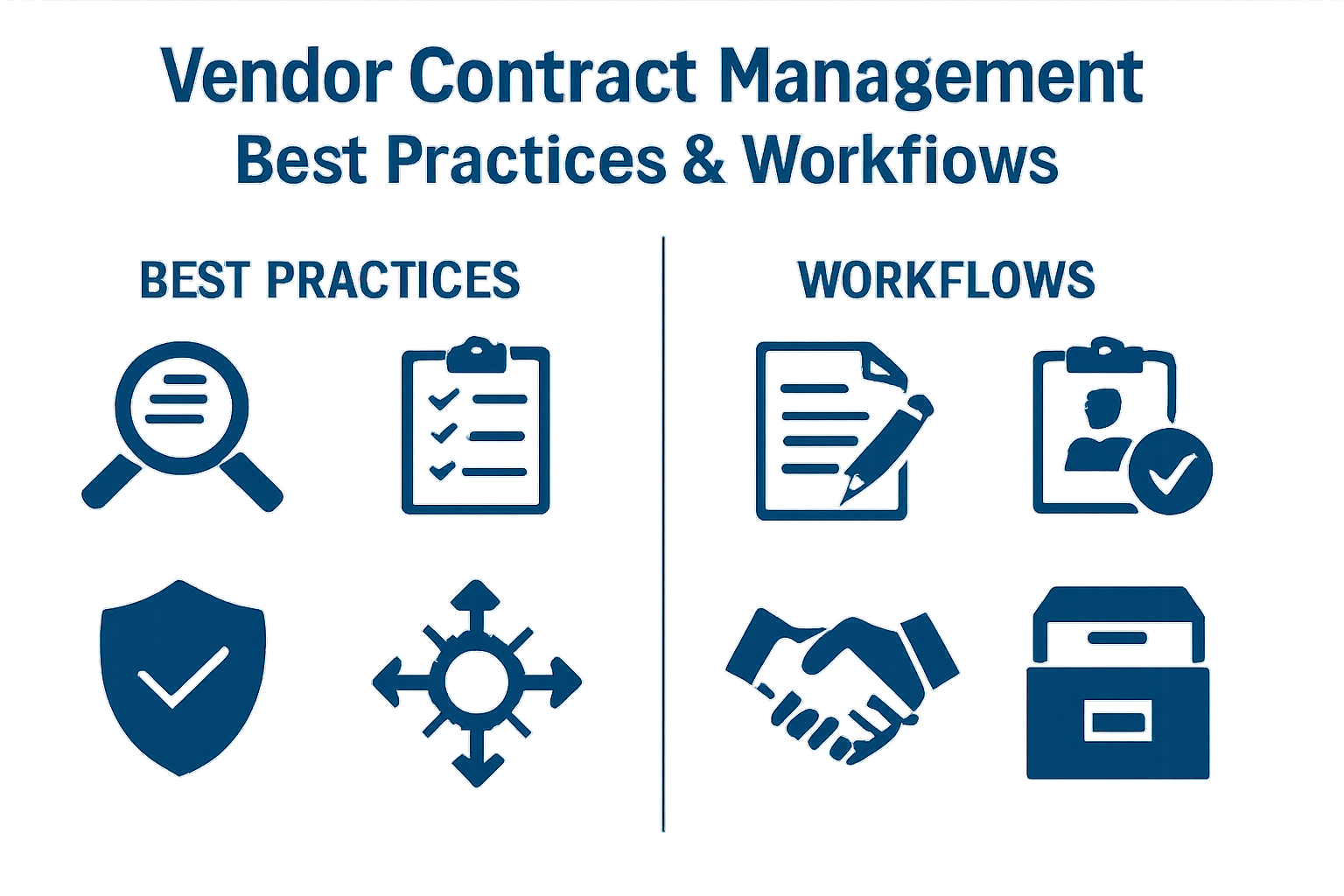
Vendor Contract Management: Best Practices & Workflows
In a high-growth environment, your vendors are your partners in scale—but without a proactive management strategy, these vital relationships can quickly slip into a cycle of “hidden spend” and operational risk.
If you haven’t already, you should start by implementing a contract management workflow to lay the groundwork.
Once that foundation is in place, you can layer on these specific vendor habits to ensure every partnership delivers maximum value with minimum manual effort.
Top 4 Vendor Contract Management Workflows
To maintain control, most high-performing procurement teams use a CLM tool to automate these four essential workflows
- Standardized Vendor Onboarding: Don’t let vendors dictate the terms. A standardized intake workflow ensures you collect necessary security certifications, insurance documents, and tax info before a contract is even drafted.
- Centralized Contract Requests: Stop the “Slack and Email” chaos. By using a single intake point for new vendor requests, Legal and Finance gain instant visibility into what’s being bought and why.
- Automated Renewal Management: The “silent killer” of budgets is the auto-renewal. Automated workflows should flag upcoming expirations 60–90 days in advance, giving you time to renegotiate or walk away.
- File & Compliance Expiration: Contracts aren’t the only things that expire. Use your system to track the expiration of vendor certificates (like SOC2 or ISO) so you aren’t caught off-guard during an audit.
7 Best Practices for Vendor Contract Management
Beyond the technical workflows, these seven habits help bridge the gap between “having a contract” and “managing a relationship”:
- Define Clear Expectations: Use SLAs (Service Level Agreements) to turn vague promises into measurable data points.
- Establish a Communication Plan: Know exactly who to call when things go wrong—and who owns the relationship internally.
- Monitor Vendor Performance: Don’t wait for a disaster. Conduct regular reviews to ensure the vendor is actually meeting the goals defined in the intake stage.
- Ensure Continuous Compliance: Regulatory requirements change. Regularly check that your vendors are staying compliant with the latest data privacy and industry laws.
- Maintain a Single Source of Truth: Every vendor agreement—and every amendment—must live in one central, searchable repository.
- Document All Interactions: Keep a “paper trail” of performance issues or scope changes. This is your best leverage during renewal negotiations.
- Conduct Regular Audits: Once or twice a year, audit your vendor list to identify redundant services or “ghost” subscriptions that can be cut.
The Bottom Line
At the end of the day, vendor management is a cycle, not a straight line.
Remember, when you combine automated workflows with these strategic habits, you aren’t just managing contracts—you’re building a foundation of trust and clarity that allows your company to move faster and grow further.
See it in action
Turn contract chaos into a streamlined workflow
Join legal teams who cut contract turnaround time by 60%. Book a 15-minute demo to see how.