What to Do When Your Key Contract Manager Leaves: Protecting Institutional Knowledge
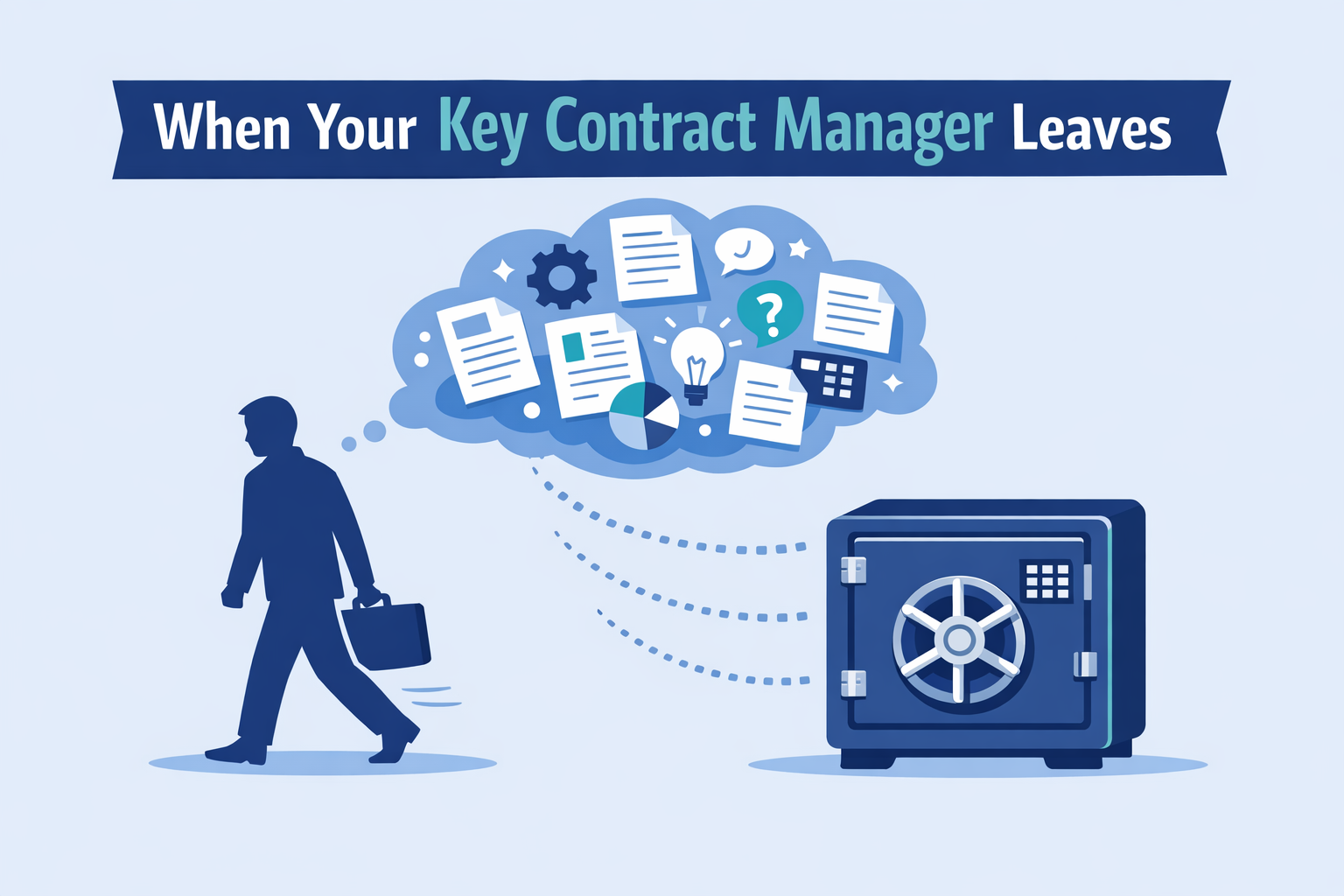
It is a scenario every research office dreads. Your most experienced contract manager gives two weeks’ notice. They have been managing your Research Collaboration Agreement portfolio for 15 years. They know which sponsors are flexible on IP terms, which PIs need hand-holding through the negotiation process, which agreements have side letters that are not in the main file, and where the bodies are buried.
In two weeks, all of that walks out the door.
This is not a theoretical risk. Research administration faces a genuine talent pipeline problem. Experienced staff are retiring faster than institutions can replace them, and the people leaving carry decades of context that was never written down. If you are reading this, there is a good chance it just happened to you.
Here is what to do.
What You Are Actually Losing
It is tempting to think of this as a staffing problem: one person leaves, you hire another. But what you are actually losing is not a person. It is a layer of institutional knowledge that took years to accumulate and was never formally captured.
Negotiation History
Why did your office accept those unusual IP terms with Sponsor X three years ago? Because of a specific concession they made on publication rights that made the overall deal favorable. That context lives in someone’s head. Without it, the next person reviewing a renewal from the same sponsor has no idea whether to hold the line or concede, and no basis for knowing which approach is right.
Relationship Context
Which sponsor contacts are reasonable to work with? Which ones require escalation to senior leadership before you even start negotiating? Who in the sponsor’s legal team promised what informally during the last round of negotiations? These relationships take years to build, and they cannot be transferred in a two-week handover.
Undocumented Positions
Your “official” negotiation guidance says walk away from uncapped indemnity. But your departing manager knows that for Sponsor Y, the office accepted it three years ago because of a separate institutional insurance arrangement that covers the exposure. Without that context, the new person will either reject a workable deal or accept risk they do not understand.
In-Flight Negotiations
Active deals sit at various stages across your portfolio. Some are nearly closed. Some are stuck on a single clause. Some have been going back and forth for months. The departing manager holds the thread on all of them: what has been agreed verbally, what the counterparty’s hot buttons are, what concessions are still available.
Institutional Memory
Where are the fully executed copies of the 2019 agreements with the consortium? What happened to the Material Transfer Agreement that was supposedly terminated but the materials were never returned? Which PI’s lab still has obligations under a confidentiality agreement that technically expired but has surviving provisions?
None of this is the kind of knowledge you can extract by searching a shared drive.
Emergency Triage: The First Two Weeks
You cannot capture 15 years of institutional knowledge in two weeks. But you can prevent the most damaging losses. Here is a practical timeline.
Day 1-2: Inventory Active Negotiations
Before anything else, get a complete list of every agreement currently in negotiation. For each one, document:
- The counterparty and their primary contact
- The agreement type (RCA, MTA, NDA, DUA, subaward)
- Current status: where is the draft, who has the pen
- Key open issues and what has already been conceded
- Any verbal commitments or informal understandings
This inventory is the single most important output of the handover period. Active negotiations cannot wait for a new hire to get up to speed. Someone needs to pick these up immediately, and they need enough context to avoid undoing work that has already been done.
Day 3-5: Identify Critical Deadlines
Pull every deadline in the next 90 days:
- Agreement renewals with auto-renewal or termination notice periods
- Milestone reporting obligations under sponsored research agreements
- Option exercise deadlines for IP licences
- Regulatory compliance deadlines (IRB renewals, export control reviews)
- Subaward invoicing or close-out dates
Missing a renewal notice period is the kind of mistake that creates real institutional damage, and it is exactly the kind of thing that falls through the cracks when the person who tracked these dates is no longer there.
Day 6-10: Structured Knowledge Transfer
This is not “tell me everything you know.” That approach produces an overwhelming brain dump that nobody can act on. Instead, structure the sessions around specific topics:
Top 10 counterparty relationships. For each: the key contacts, the relationship history, known preferences and sensitivities, and any informal commitments or understandings.
Non-standard positions accepted. Every time the office deviated from its standard playbook, and why. This is the hardest knowledge to recapture later because it often looks like a mistake without context.
Known problem agreements. Agreements with unresolved compliance issues, disputes, or ambiguous terms that could surface later.
Where to find things. File locations, naming conventions, which shared drives have current versions versus archived ones, email folders with critical correspondence.
Day 11-14: Document and Verify
Write up everything from the knowledge transfer sessions. Then verify:
- The departing person’s successor (or interim cover) has access to all systems, file shares, and email archives
- Login credentials for sponsor portals and compliance systems have been transferred
- Auto-forwarding has been set up for the departing person’s email (or, at minimum, the mailbox will remain accessible)
- Calendar entries for recurring obligations have been transferred or recreated
Two weeks is not enough time to do this thoroughly. But it is enough time to prevent the worst outcomes if you use it deliberately.
What Falls Through the Cracks
Even with a well-executed handover, certain categories of knowledge are almost impossible to transfer fully.
Side letters and informal amendments. Agreements sometimes get modified through side letters or email exchanges that were never filed with the main agreement. The departing manager knew about them. The replacement will not, until a compliance question surfaces and the side letter is the only thing that makes the arrangement make sense.
Verbal commitments. Things agreed in phone calls that were never documented. “We told them we would be flexible on the overhead rate for the next phase.” “Their VP of Research said they would not enforce the non-compete provision.” These commitments are real, and when the new person does not honour them, it damages relationships.
Counterparty personalities and negotiation styles. Knowing that a particular sponsor’s legal counsel responds well to detailed justifications but shuts down when they feel pressured: that is the kind of intelligence that makes negotiations efficient. It cannot be written in a memo.
The “why” behind non-standard terms. A new reviewer looking at a legacy agreement with unusual terms will not know whether those terms reflect a deliberate business decision or a mistake by a previous negotiator. Without context, they cannot assess risk accurately.
Buried email threads. Critical context often lives in email correspondence that was never extracted into the contract file. If the departing manager’s email is archived or deleted, that context is gone permanently.
Building Resilience: So This Never Happens Again
The immediate crisis will pass. You will get through the transition, one way or another. But once you are on the other side, it is worth asking a harder question: why was so much institutional knowledge dependent on a single person?
The answer, in most research offices, is that the tools and processes were never designed to capture it. Here is how to change that.
Clause Libraries Preserve Institutional Language
When pre-approved clause alternatives live in a centralized clause library, they survive staff changes automatically. The new contract manager does not need to reconstruct acceptable fallback language from memory or dig through old agreements to find precedent. The approved alternatives are already there, organized by clause type and agreement category.
Playbooks Document the “Why”
A good contract playbook does not just say “accept X.” It includes guidance notes explaining why: the institutional rationale, the risk context, the policy basis. This means the next person in the role can exercise informed judgment in new situations rather than blindly following rules they do not understand or ignoring guidance they cannot make sense of.
With Pactly Playbooks, those positions are embedded directly in the review workflow. When a reviewer opens a contract, the guidance appears alongside the clause they are reviewing, not in a separate document they have to remember to check.
Version History Captures Negotiation Context
Every version of every agreement, with comments and tracked changes, creates a retrievable record of how a deal evolved. When the new person needs to understand why a particular provision ended up the way it did, they can trace the negotiation history rather than guessing.
Audit Trails Log Decisions
Who approved the deviation from standard terms? When? And ideally, why? An audit trail makes these answers retrievable rather than dependent on someone’s memory. It also protects the institution when questions arise years later about why a particular arrangement was approved.
Central Repository Means Nothing Is Lost
No more “it was in Sarah’s email” or “check the shared drive, maybe under the old folder structure.” If your office is still managing contracts through spreadsheets and email, a departure like this will expose just how fragile that approach is. A centralized contract repository means every agreement, every amendment, every side letter has one canonical location. When someone leaves, the contracts do not leave with them.
For research offices managing agreements across multiple departments, centralizing contract management is especially critical. Knowledge loss is compounded when contracts are scattered across departmental silos and the only person who knew the full picture is gone.
Standardized Workflows Make the Process Person-Independent
When the workflow is in the system (intake, review, approval routing, execution, storage), the new person follows the same process from day one. They do not need to reconstruct the workflow from institutional folklore. The system guides them through each step, and the process does not degrade when personnel change.
The Bigger Picture
Research administration faces a structural challenge that extends beyond any single departure. Experienced contract managers are retiring. The pipeline of replacements is thin. Universities compete with each other and with the private sector for a limited pool of people who understand both legal and research contexts.
Contract lifecycle management is not about replacing people. Experienced contract managers bring judgment, relationship skills, and domain expertise that no system can replicate. What CLM does is make the institution less dependent on any single person’s memory. It ensures that when someone leaves, whether planned or sudden, the knowledge they built stays behind.
The best time to build these systems was before the departure. The second best time is now.
Moving Forward
Losing an experienced contract manager is disruptive. There is no way around that. But it is also an opportunity to build the infrastructure that makes your research office resilient, not just for this transition, but for every one that follows.
If you are looking to protect your research office from knowledge loss and build systems that preserve institutional expertise, we would be happy to show you how Pactly can help. Book a demo and we can walk through how other research offices have approached this.
See it in action
Turn contract chaos into a streamlined workflow
Join legal teams who cut contract turnaround time by 60%. Book a 15-minute demo to see how.